Morphology and Characteristics of Microorganisms in UTI
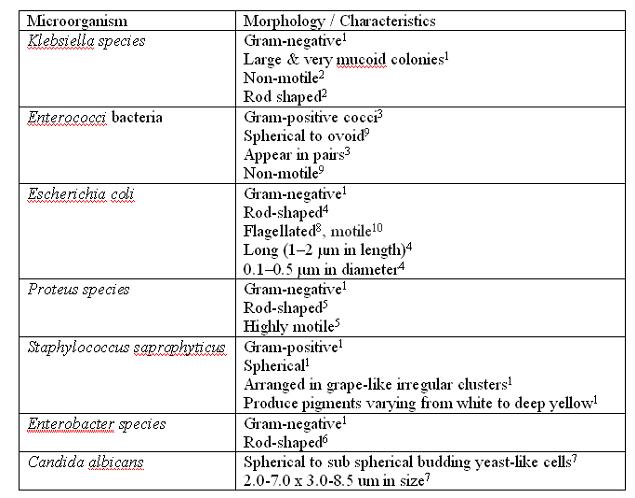
Morphology of microorganisms in Urinary Tract Infection (UTI)

References:
[1] G.Brooks, J.Butel and S.Morse. (2004). Jawetz, Melnick & Adelberg’s Medical Microbiology
[2] http://en.wikipedia.org/wiki/Klebsiella
[3] http://en.wikipedia.org/wiki/Enterococci
[4] http://en.wikipedia.org/wiki/Escherichia_coli
[5] http://tucom.bigbri.net/?p=108
[6] http://en.wikipedia.org/wiki/Enterobacter
[7]http://www.mycology.adelaide.edu.au/Fungal_Descriptions/Yeasts/Candida/Candida_albicans.html
[8] http://www.jyi.org/volumes/volume6/issue5/features/hu.html
[9] http://www.pdrhealth.com/drug_info/nmdrugprofiles/nutsupdrugs/pro_0034.shtml[10] http://medinfo.ufl.edu/year2/mmid/bms5300/bugs/esccoli.html
[10] http://medinfo.ufl.edu/year2/mmid/bms5300/bugs/esccoli.html
References:
[1] G.Brooks, J.Butel and S.Morse. (2004). Jawetz, Melnick & Adelberg’s Medical Microbiology
[2] http://en.wikipedia.org/wiki/Klebsiella
[3] http://en.wikipedia.org/wiki/Enterococci
[4] http://en.wikipedia.org/wiki/Escherichia_coli
[5] http://tucom.bigbri.net/?p=108
[6] http://en.wikipedia.org/wiki/Enterobacter
[7]http://www.mycology.adelaide.edu.au/Fungal_Descriptions/Yeasts/Candida/Candida_albicans.html
[8] http://www.jyi.org/volumes/volume6/issue5/features/hu.html
[9] http://www.pdrhealth.com/drug_info/nmdrugprofiles/nutsupdrugs/pro_0034.shtml[10] http://medinfo.ufl.edu/year2/mmid/bms5300/bugs/esccoli.html
[10] http://medinfo.ufl.edu/year2/mmid/bms5300/bugs/esccoli.html
posted by Samantha @ 9:51 AM


2 Comments:
At 2:12 AM, Dose Pharmacy said…
Thanks for this article.
Urinary tract diseases are probably the most widely recognized bacterial contaminations, influencing 150 million individuals every year around the world.
Go here -Pharmacy Shop Online
At 10:10 PM, Dr.elina macfrance (MD. PHD) said…
Cenforce 100 mg and kamagra 100mg are medications commonly discussed for the treatment of erectile dysfunction (ED). Both contain sildenafil citrate, the same active ingredient found in Viagra. Sildenafil citrate 100 mgbelongs to a class of medicines called phosphodiesterase type 5 (PDE5) inhibitors. It helps increase blood flow to the penis during sexual stimulation, supporting the ability to achieve and maintain an erection. However, both medicines require appropriate medical guidance, and their safety and suitability may vary by individual.
Post a Comment
<< Home